World Tourism Day: Cuba in the traveler’s heart and backpack
Cuba holds a prominent place in the history of Caribbean tourism. Its tourism landscape blends relaxation, adventure, history and human connection.
Posted by Yisell Rodríguez Milán, 27/09/2026
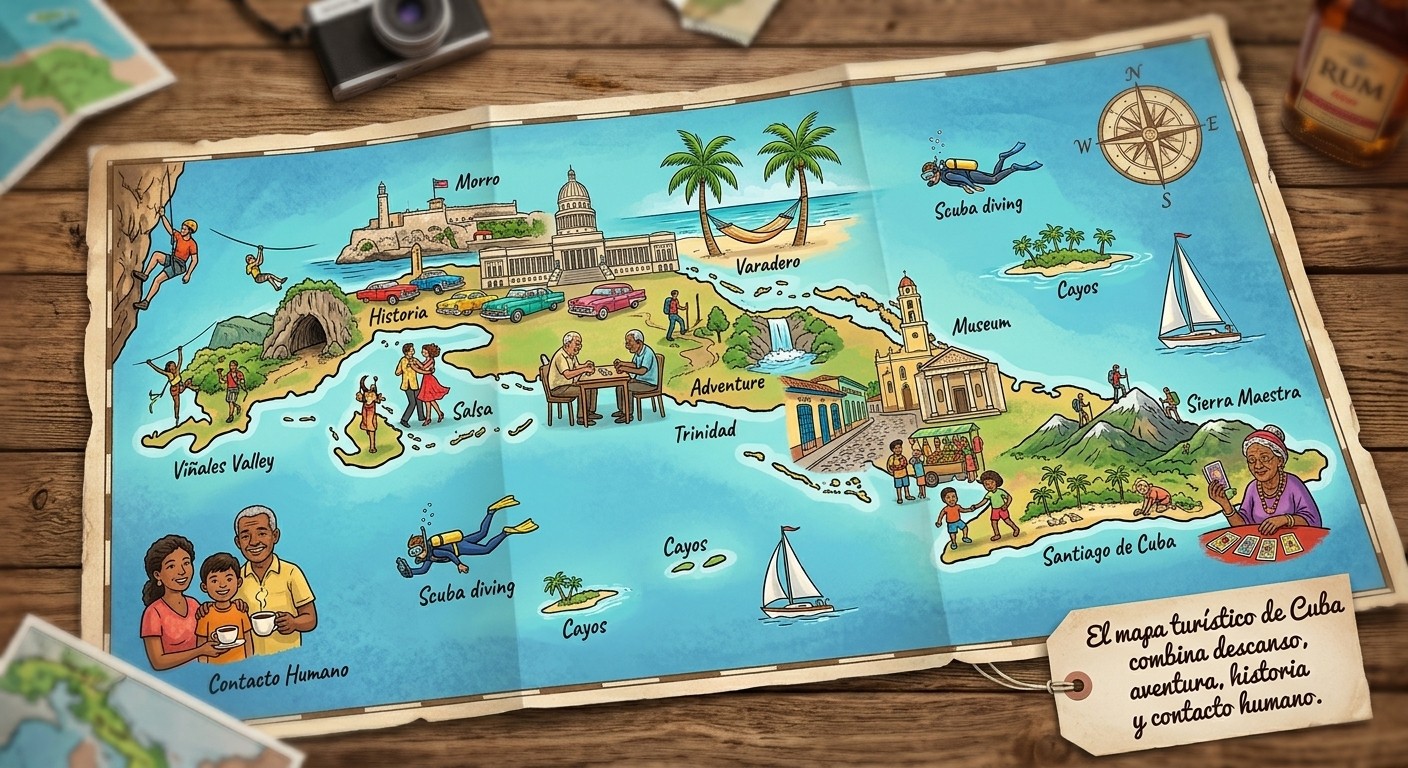
Photos: Generated with Gemini AI
Every September 27, World Tourism Day invites us to look at travel beyond mere photographs and itineraries, reminding us that tourism can also build bridges between peoples, preserve memories, and foster a deeper understanding of the realities experienced by host communities.
In the Caribbean, few islands embody that spirit as powerfully as Cuba.
A tourism history with deep roots
Cuba holds a prominent place in the history of Caribbean tourism. Long before becoming a renowned international destination, the island was already attracting travelers thanks to its geographic location, landscapes, and rich port cities. Havana, Santiago de Cuba, Trinidad, and other locales served as meeting points for diverse cultures, trade routes and traditions.
Over time, a unique tourism offering took shape: crystal-clear waters, heritage cities, music, cuisine, nature, and a cultural identity recognized worldwide. Varadero, the offshore keys, Playa Ancón, Guardalavaca, and numerous lesser-known destinations form a tourism map that combines relaxation, adventure, history and human connection.
However, Cuba’s importance as a destination cannot be explained solely by its natural assets. The island has successfully projected a distinctive cultural image—one in which the hospitality, creativity, and resilience of its people play a central role.
Why do so many travelers return?
There are many reasons for the loyalty shown by those who visit Cuba. For some, the appeal begins with its beaches and landscapes; for others, it lies in the music heard in the streets, the architecture, baseball, tobacco, coffee, or traditional cuisine. Yet, what often turns a first visit into a lasting bond is the connection made with the people.
Travelers in Cuba encounter spontaneous conversations, humor, solidarity, and a unique way of sharing, even amidst hardship. Many visitors return because they wish to reconnect with friends, communities, and experiences that cannot be reduced to a mere tourist package.
The country’s diversity also plays a role. One can tour Havana’s historic center, walk the colonial streets of Trinidad, explore the landscapes of Viñales, discover the eastern mountains, or relax on a white-sand beach. Each region offers a different side of Cuba.
For the traveler, returning also means deepening that bond by engaging with community projects, local enterprises, and national products, and by gaining a better understanding of the population’s daily life.
Travel as an act of solidarity
Cuba’s current situation presents an additional challenge. Fuel shortages and energy issues affect transportation, services, commerce, and the daily lives of millions of people—consequences of the economic, commercial, and financial blockade imposed by the United States, as well as restrictions limiting access to resources, credit, and fuel supplies.
In this context, traveling to Cuba can become a tangible form of solidarity with its people, provided it is done ethically and responsibly. While tourism alone cannot resolve a crisis, it can help sustain jobs, small businesses, cooperatives, guides, transport workers, artists, artisans, and families who rely on the tourism sector.
Choosing accommodation, hiring local services, buying directly from producers and artisans, and respecting conservation guidelines are simple actions with a significant impact. It is also important to travel with sensitivity: understanding the limitations of certain services, avoiding the waste of resources, and refraining from turning the population’s hardships into a spectacle. Traveler solidarity begins with listening and approaching others with respect; enjoying landscapes without ignoring the problems; and recognizing that behind every destination, there are people sustaining their community under complex circumstances.