Viajes Cubanacán’s Mastertours 2026: What tour guides can expect
The event will bring together travelers, agencies, and industry professionals
Posted by Sol de Cuba, 11/10/2026
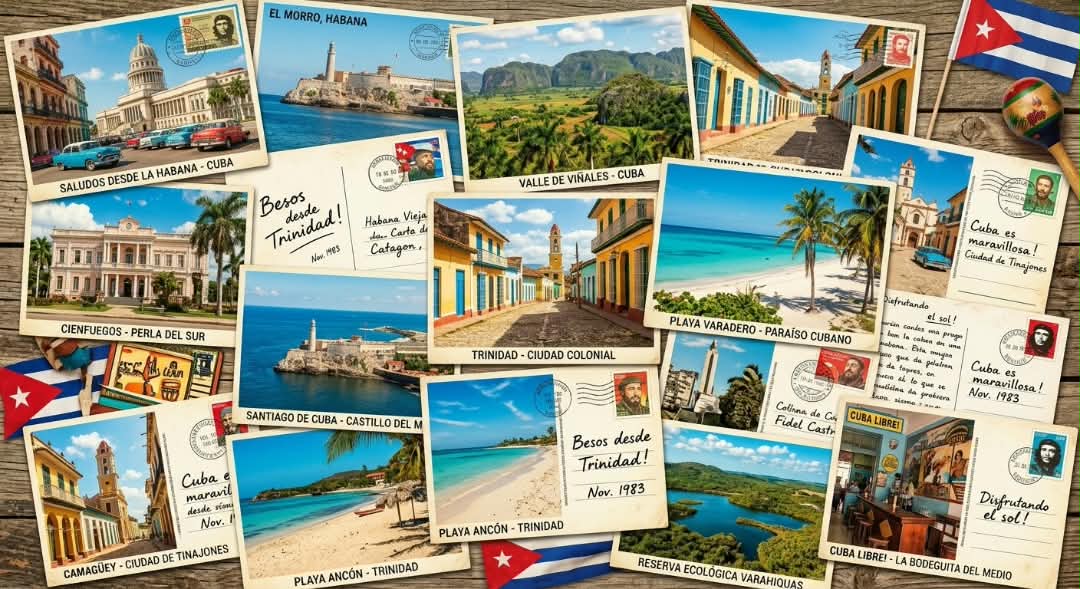
Postcards of tourist sites in Cuba
MasterTours—a unique event bringing together travelers, agencies, and tourism professionals in one place—is organized by Viajes Cubanacán and will take place November 18–20 of this year, with venues split between the Hotel Palco in Havana and Viñales.
The event aims to educate, train, and recognize the work of tour guides, reinforcing their role within a sustainable tourism model that respects local culture. The goal is to create a space for continuous learning that enhances the professional qualifications of guides across the country.
According to Yadismir Saavedra, director general of Viajes Cubanacán, the Eventos en Cuba platform confirmed that the Havana International Conference Center will serve as the main venue for the scheduled talks and lectures.
The program comprises two distinct stages. The first, based in the Cuban capital, will cover new trends in the global tourism sector, serving travelers from diverse cultural and linguistic backgrounds, current international market demands, and direct experiences with international guide associations.
The second phase will take place in Pinar del Río province, where guides will focus on group management within cities of high heritage value and across various natural settings. The program places special emphasis on the tradition of Cuban tobacco.
The Palco Group, acting as the primary partner, along with companies such as Cubasol, Transtur, and Palmares, is responsible for providing transportation, accommodation, and other logistical services, as reported by Eventos en Cuba.
The challenge facing tour guides in Cuba
Tour guides in Cuba face a growing challenge: travelers arrive on the island with expectations shaped by social media, blogs, videos, and review platforms where incomplete, exaggerated, or outright false information circulates. This situation can influence perceptions of the destination before, during, and after the trip.
One of the main challenges lies in correcting erroneous information without sparking an argument with the tourist. Guides must explain the distinctions between personal experiences, political opinions, and verifiable facts. To do so effectively, they need to rely on credible sources, up-to-date data, and concrete examples, all while maintaining a respectful tone.
The internet often presents idealized images of the country’s beaches, urban life, tourism services, and economic situation. Conversely, entirely negative portrayals also circulate, depicting Cuba as an unattractive, unsafe, or inaccessible destination. In this context, a well-prepared guide helps adjust these expectations by providing a balanced perspective: showcasing the country’s attractions while also addressing limitations regarding transportation, connectivity, product availability, power outages caused by the U.S. energy blockade, and changes in services or infrastructure.
Furthermore, guides have a responsibility to offer a broader perspective—one that encompasses regional diversity, cultural heritage, daily life, and contemporary changes. By doing so, they move beyond merely reciting historical facts to become a mediator between digital information and the reality of the destination.