Cuba promotes new transformations to revitalize the tourism sector
Minister announces transformations within the sector
Posted by Sol de Cuba, 13/11/2026
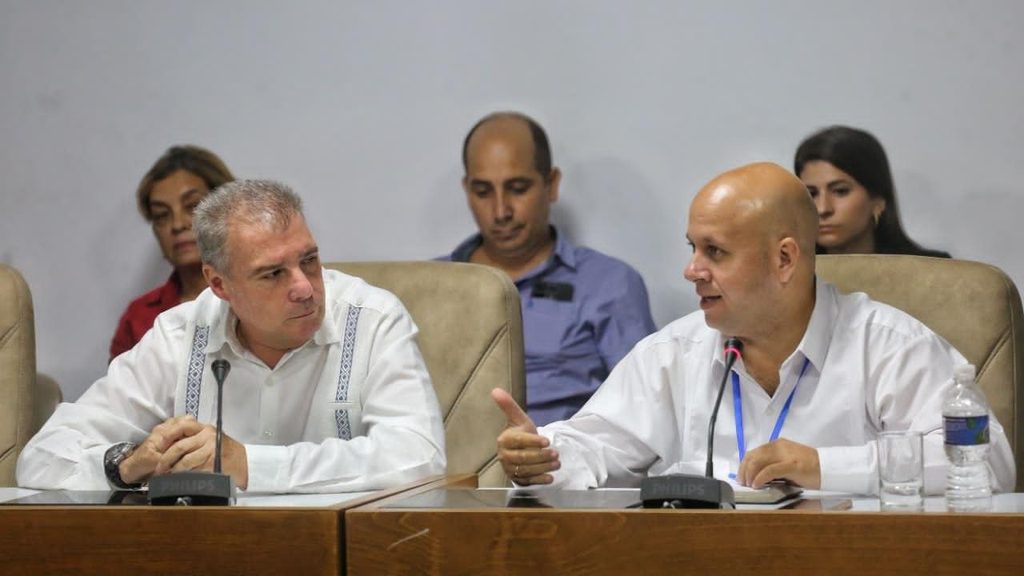
Cuba’s Minister of Tourism, Juan Carlos García Granda, highlighted the effort and creativity shown by the business community in maintaining sector operations, despite pressures stemming from the economic, commercial, and financial blockade imposed by the United States, as well as measures aimed at intensifying it.
Speaking at the CE-GESTA 2026 International Congress on Management, Local Development, Tourism, and Cooperativism, the minister noted that, notwithstanding these challenges, nearly 1,000 travelers arrive in the Caribbean nation every day. He further stated that both domestic and foreign investors have shown interest in opportunities arising from 176 recently implemented economic and social transformations.
According to a report by Cubadebate, García Granda explained that the sector’s new strategy prioritizes restoring confidence, attracting new operators, and expanding commercial ties with companies not subject to U.S. sanctions.
The minister underscored the potential offered by “Axis 17″—a framework dedicated to tourism development—which incorporates input from workers, partners, and industry experts. The goal is to achieve greater autonomy and strengthen ties with the non-state sector.
Among the measures, he cited Decree-Law 114, which facilitates partnerships between micro, small, and medium-sized enterprises (MSMEs), the private sector, and state-owned socialist enterprises—the latter of which will continue to play a significant role in tourism-related activities. He also outlined new methods for attracting capital, such as the leasing of facilities, the granting of real rights of usufruct for a fee, concessions for areas containing assets or currently under development, and the sale of real estate to foreign investors—as well as to Cubans residing abroad or within the country—pursuant to Agreements 10427 and 10429.
Other initiatives include the creation of a corporate bank, improved access for foreign investors to manage their foreign-currency earnings, and the development of tourism in keys and heritage zones, including Trinidad and Old Havana. In the latter, business owners have expressed interest in the 20 hotels owned by Habaguanex, as well as other properties.
The official also mentioned the possibility of forming joint ventures to restore coastal social clubs and putting marinas up for public tender. He added that ecotourism projects and other specialized tourism ventures will be eligible for tax and fiscal incentives.
García Granda noted that the ministry has received 346 expressions of interest, primarily linked to the Cubasol business group—which encompasses entities such as Palmares and Marlin—as well as hotel chains like Isla Azul, Gaviota, and Cubanacán, along with Servitur, the camping enterprise, and various travel agencies.
The proposals are concentrated mainly in Havana, Matanzas, Holguín, Camagüey, Cienfuegos, and Santiago de Cuba. MSMEs account for the largest share of these requests, with 146 expressions of interest, followed by foreign companies from countries including Spain, Germany, Canada and China.
Regarding institutional reorganization, the minister announced the creation of a new Ministry of Tourism, with specific functions defined by law. “We are responsible for the country as a destination and for its image. We are not going to create tourism companies; we simply authorize them to carry out their operations,” he explained. Furthermore, changes to business groups were announced, aimed at bringing decision-making closer to grassroots operational levels and facilitating the creation of MSMEs linked to tourism activities—which were described as a “necessary complement” for achieving a more efficient and competitive business ecosystem.
Among the new regulatory developments is a revision of restrictions on activities involving motorized watercraft, provided that safety requirements and international regulations are met. The rental of vehicles from state-owned, foreign, and private companies will also be authorized, with the first license for this type of service to be issued soon.
The strategy also includes the creation of private travel agencies and the authorization of independent tour guides and sales agents—subject to prior certification—as well as the introduction of the role of “local destination manager,” designed to integrate various economic stakeholders into tourism development.