International Seminar on Tourism Law: Commitment to the future and legal regulations
Cuban Minister of Tourism, Juan Carlos García Granda, described the event as a crucial forum for dialogue within the sector and a strategic opportunity for national development
Posted by Daily Pérez Guillén, 11/12/2025
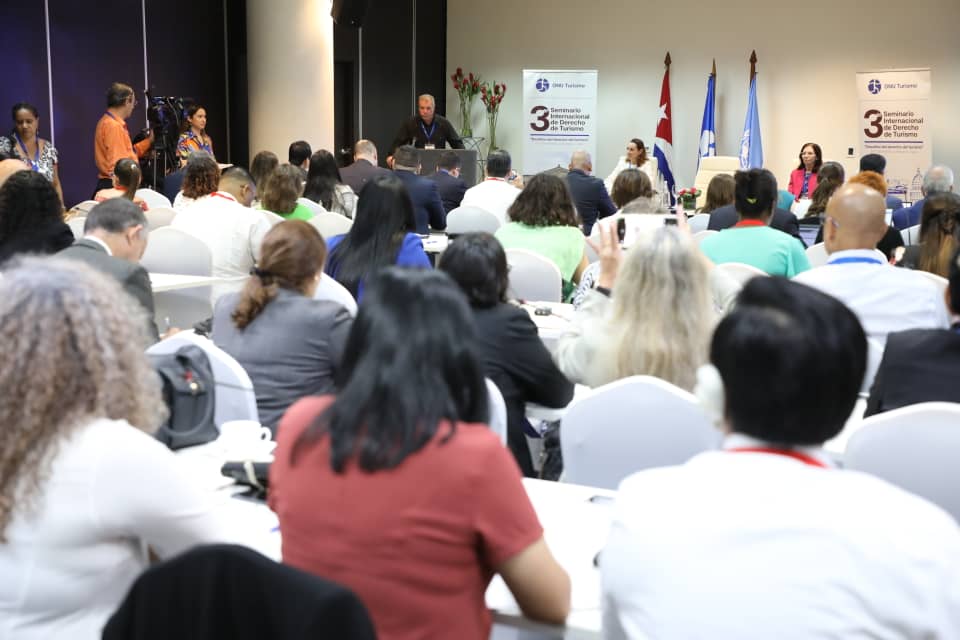
Cuba is hosting the Third International Seminar on Tourism Law, which brings together authorities, representatives of international organizations, academics, jurists, industry professionals and specialized press.
In his opening remarks, Cuban Minister of Tourism, Juan Carlos García Granda, described the event as a crucial forum for dialogue within the sector and a strategic opportunity for national development.
“We are experiencing unprecedented times of transformation worldwide. Technological advances have redefined the tourism experience, and these are not just technical issues; they are, above all, matters of adaptation, protection, and a vision for the future. Faced with this reality, the law constitutes a guiding instrument so that this process translates into a fairer, more accessible, and more sustainable world that provides real benefits to communities,” he stated.
The minister referred to the relevance of this meeting for Cuba, which, despite external limitations, is making progress in creating a legal framework that promotes higher-quality tourism, prioritizing the protection of natural and cultural heritage and viewing foreign investment — under strict respect for sovereignty — as a driving force for national development.

“Cuba reiterates its unwavering commitment to international cooperation, multilateralism, and the leading role of UN Tourism. We reaffirm our support for comprehensive and coordinated global regulations, including the International Code for the Protection of Tourists, which we signed up to in April of last year,” he stated.
The UN Tourism representative and Director of the Department of Legal Affairs and International Standards, Alicia Gómez, commented that this event is intended to analyze and discuss the sector’s main challenges from a legal perspective and to contribute solutions that guarantee more sustainable tourism, respectful of the environment and the cultural heritage of communities, and that generates employment and social well-being.
“Tourism is an important economic engine and is also a tool for inclusion and a space for cultural exchange. It needs to be defended through law, just as it is promoted through economics. Tourism law is no longer a peripheral branch, but a central axis to ensure that tourist destinations do not reproduce inequalities and destroy what they intend to show the world, but rather contribute to strengthening our society,” she asserted.

Gómez highlighted UN Tourism’s collaboration with Cuba in recent years through various projects and activities, such as the 2024 Workshop on Innovation and Community Tourism, an investment strategy that promotes innovation in the development of new tourist resorts and experiences, and the hosting of the 69th UN Tourism Regional Commission.
Meanwhile, the UN Resident Coordinator in Cuba, Francisco Pichón, emphasized that tourism occupies a priority position in the new cooperation framework with Cuba. “We recognize the sector’s role as an engine that drives the economy, and from a circularity model, we are also promoting modalities such as agrotourism, ecotourism and rural tourism, aligned with municipal development strategies.”

He added that the vision of sustainable tourism seeks to leverage all of Cuba’s potential, which extends far beyond its hotel infrastructure. “This is a country of extraordinary natural wealth, with a powerful culture, and above all, with resilient and joyful people who face challenges,” he highlighted.
Representatives from 23 countries are attending the seminar.