Working toward sustainable governance for the Guamuhaya National Geopark
Topes de Collantes hosts the workshop “Towards Integrated Management of the Guamuhaya National Geopark”
Posted by Daily Pérez Guillén, 21/09/2026
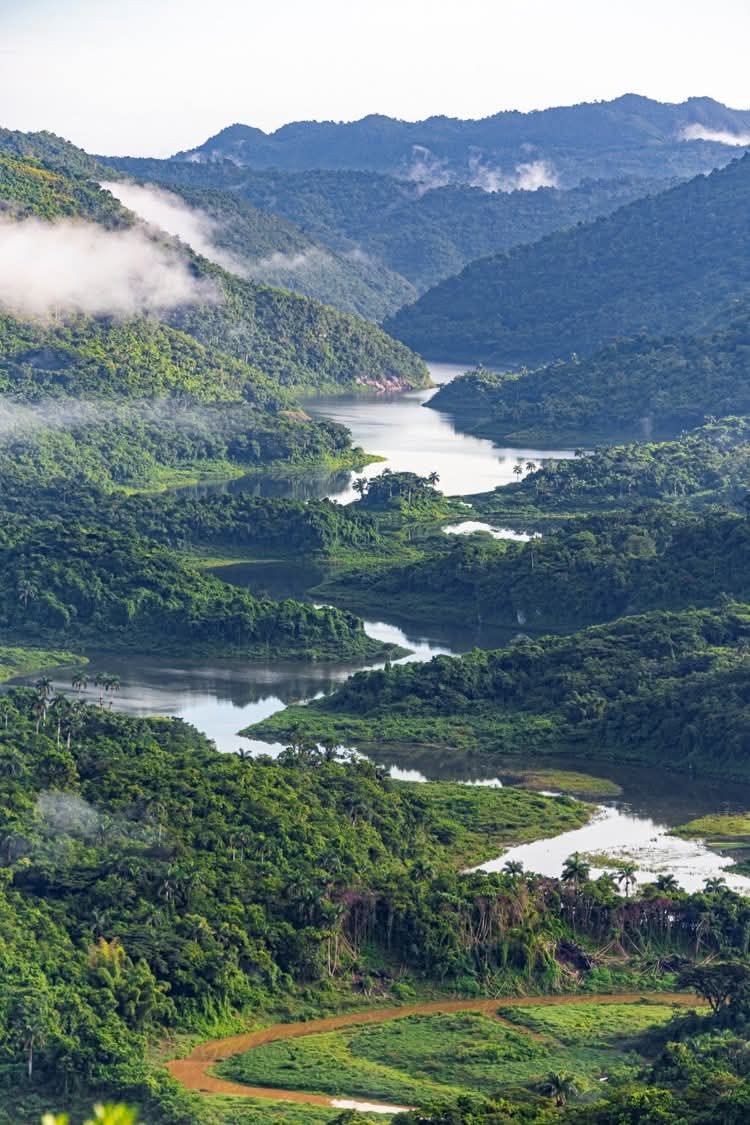
With a focus on a management model that combines conservation and development, more than 35 specialists, managers, tour guides, and community leaders from Sancti Spíritus, Villa Clara, and Cienfuegos are participating—from September 15 to 18—in the workshop “Towards Integrated Management of the Guamuhaya National Geopark,” held in Topes de Collantes.
The event, convened by the Gaviota Tourism Group alongside the Ministries of Energy and Mines and of Science, Technology and Environment, aims to lay the groundwork for a governance model for this mountainous territory. This model seeks to safeguard the area’s geological heritage while fostering the socioeconomic progress of local communities through sustainable and responsible tourism.
A key highlight of the workshop is the presentation of the geopark’s digital platform, which combines a website and social media channels to support the area’s management, communication and promotion.
Additionally, coordinating boards from the three involved provinces—each containing specific areas within the massif—will meet to form a national technical team. This team will drive unified, integrated management and standardize practices across the sites that make up the National System of Protected Areas.
That list includes Topes de Collantes, Lomas de Banao, Hanabanilla, Valle de Yaguanabo, Pico San Juan, Cueva Martín Infierno, El Purial, Aguacate-Boca de Carreras, and Guajimico.
Spanning 2,143 square kilometers, the Guamuhaya National Geopark boasts 50 geosites of significant heritage value: seven of international relevance, 22 of regional significance, nine of national importance, and 12 of local importance. Complementing this natural wealth are attractions such as the region’s ruins of coffee plantation architecture, rural traditions, and the Valley of the Sugar Mills un Trinidad.
The Council of Ministers designated this territory a Geopark in November 2025, following the earlier designations of the Viñales Valley (2021) and Gran Piedra (2024). These moves solidify Cuba’s standing as a Caribbean leader in managing areas that integrate geological conservation, environmental education, and local socioeconomic development.
UNESCO, the body that grants this global designation, views these territories as “living laboratories” where science, the community, and visitors engage with Earth’s history. To date, the island has submitted a dossier to the organization for only one site—the Viñales Valley—last year. To achieve Global Geopark recognition, a territory must have clearly defined boundaries and a development project—primarily driven by geotourism—whose benefits are reinvested into the site’s management and conservation.