Cueva de los Peces: Ciénaga de Zapata’s best kept secret
A site where the earth opens up to reveal a marvel of nature: one of Cuba’s most beautiful and deepest cenotes
Posted by Sol de Cuba, 19/07/2026
Driving along the asphalt road that crosses the Zapata Peninsula feels like a journey back in time. About 18 kilometers before reaching historic Playa Girón, south of Matanzas, the lush Cuban vegetation grows denser, guarding one of the Caribbean’s best-kept secrets.
Few places have the power to take your breath away quite like Cueva de los Peces. Here, the earth opens up to reveal a marvel of nature: one of Cuba’s most beautiful and deepest cenotes.
A Mirror of water between jungle and sea
Stepping out of the car, you are greeted by the scent of salt spray and damp forest air. Cueva de los Peces is not a dark, enclosed cavern; it is a stunning natural pool—a basin of crystal-clear water that invisibly connects to the Caribbean Sea.
The first thing that strikes you is the contrast of colors. At the edges, the water is a turquoise so clear you can count the rocks on the bottom. Yet, if you look toward the center, the hue shifts to a deep navy—almost black—hinting at its immense depth. It is a tranquil abyss, surrounded by lush vegetation that appears to lean in and gaze at its own reflection.
Swimming in these calm waters is an almost mystical experience. The temperature is perfect, and the peaceful atmosphere washes away every trace of urban stress.
Ideal for snorkeling and scuba diving
Just across the road from the cenote lies a small beach with calm waters. This makes the location unique: in a single morning, you can explore the mysteries of the cenote’s deep waters and also dive into the open sea.
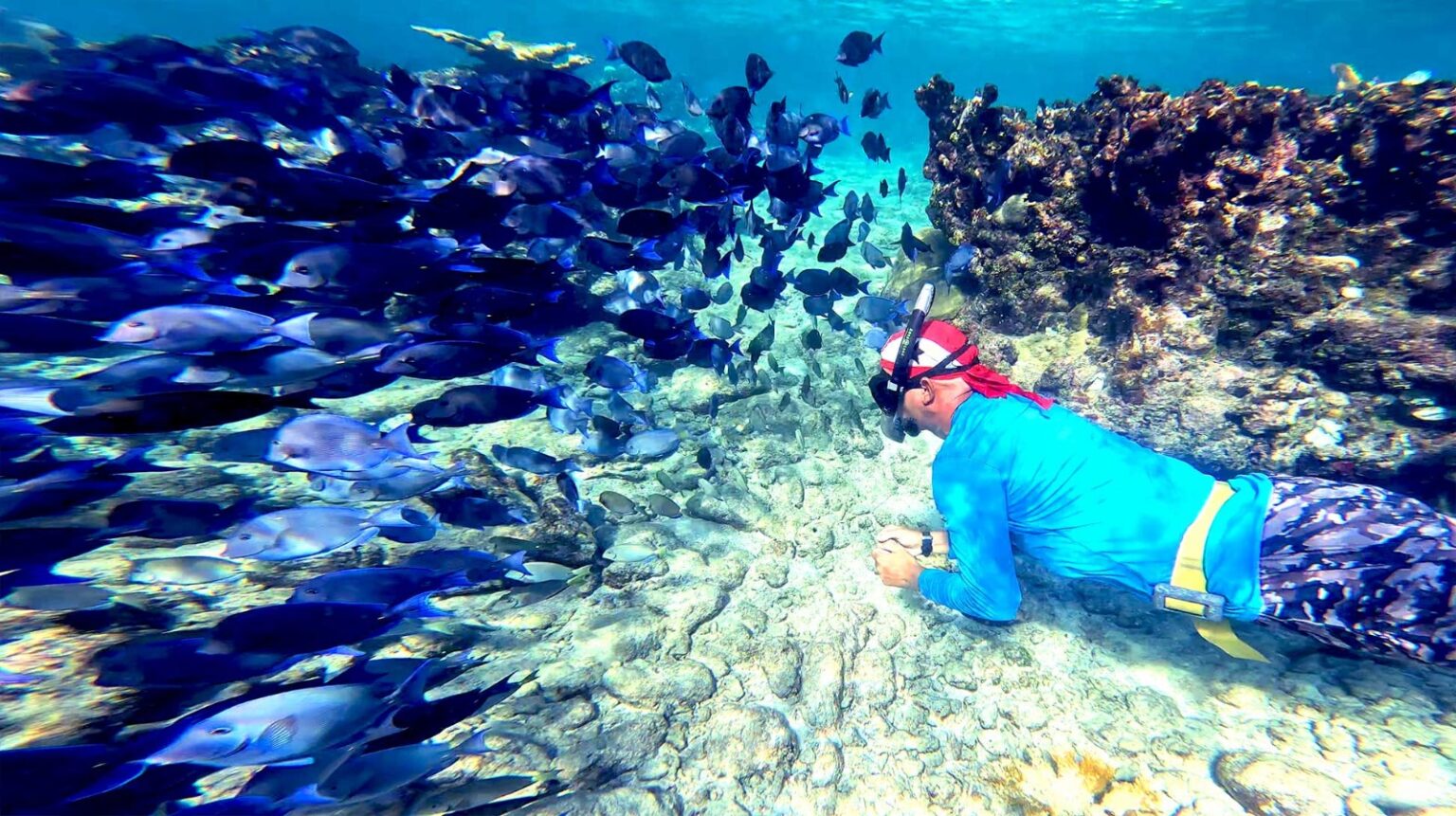
For snorkeling and scuba diving enthusiasts, this spot is like a living canvas. Once you put on your mask and submerge, the outside world fades away, giving way to a vibrant spectacle of life:
Abundant marine life: Tropical fish in every imaginable color swim fearlessly among visitors.
Coral formations: Just a few meters from the shore, the seabed is carpeted with reefs that serve as a home to sponges and starfish.
Submerged tunnels: Experienced divers can explore the underwater passages connecting the cenote to the ocean.
Cueva de los Peces stands as a testament to the power and pristine beauty of the Ciénaga de Zapata—one of the Caribbean’s most important ecological habitats and a top destination for those looking to step off the beaten path and truly connect with Cuba’s purest nature.