The “obstinacy” of the U.S. government regarding Cuban tourism
In an extensive interview, the Cuban president acknowledged the legacy of Spanish hotel companies, highlighted new business models, and denounced the impact of the U.S. blockade on tourism.
Posted by Sol de Cuba, 13/06/2026
Cuban President Miguel Díaz-Canel Bermúdez emphasized in a recent interview with the Spanish digital newspaper elDiario.es that the Spanish hotel chains operating in Cuba “are leaving against their will.”
In an extensive interview, the Cuban president acknowledged the legacy of these companies, highlighted new business models, and denounced the impact of the U.S. blockade as the fundamental cause of these difficulties.
Díaz-Canel expressed his respectful appreciation for the Spanish hotel chains and other companies that have invested in Cuba as a tourist destination for decades. “They have worked tirelessly with our tourism entities; they are businesspeople whom we greatly respect for the support they have always provided,” the president stated.
He emphasized the value of the knowledge transferred. “Just as they have been able to develop their businesses in Cuba, they have also brought knowledge to the Cuban tourism sector. And that is why we have a hotel infrastructure, thanks to the investments made by the country, which can be used today, for example, through assets, to offset debt or to generate business. However, on the other hand, there is learning, professional development for our people,” he explained.
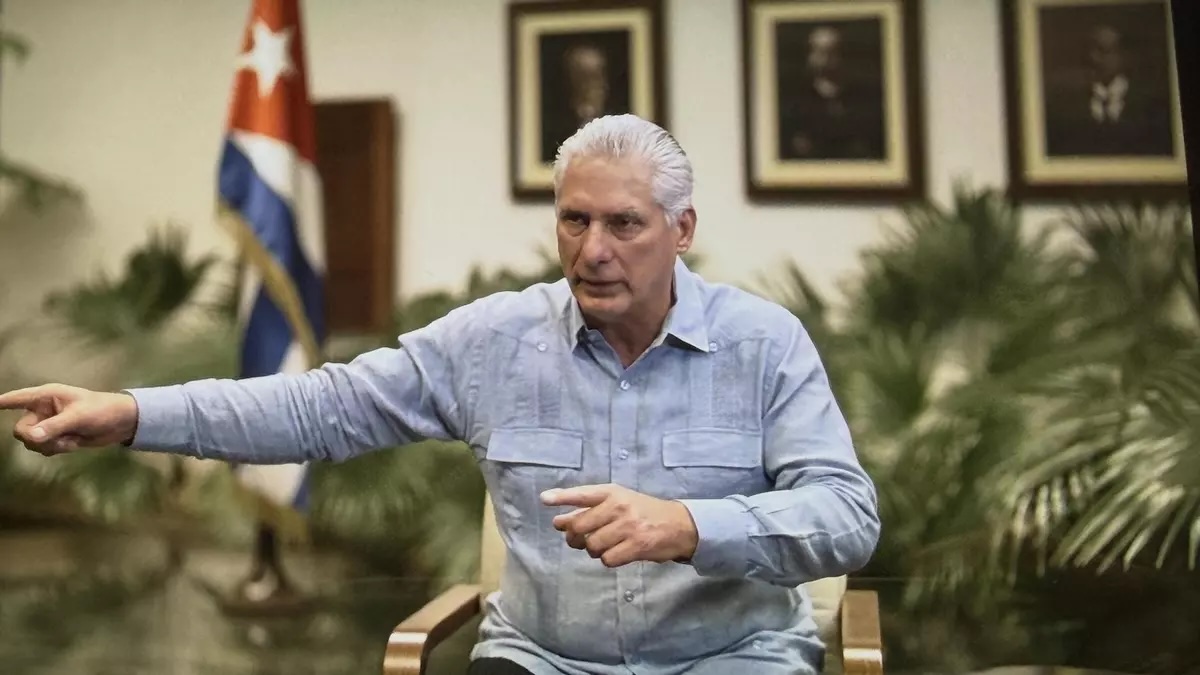
PIE: Photo: elDiario.es
The head of state described the way in which the current U.S. administration is trying to hinder the development of tourism in Cuba, a key source of income for the country’s economy, as “obstinate.”
Given this situation, the president referred to the transformations in the tourism management model. “There will be hotels that we will have to operate, and we are proposing different business models, with Cubans who want to invest in and manage hotels. We are open to that, and to people from other countries or entities that do not have accounts in the U.S. or are not dependent on the U.S., and who are willing to work with Cuba.”
Díaz-Canel commented that this possibility has already been offered to Cubans residing abroad. “I am sure that many will return to Cuba to continue their businesses.”
He also recalled that “from the very first measures of the first Trump administration, it was established that if a European visited Cuba, their ESTA (visa waiver program) would be automatically revoked. This isn’t done to anyone else in the world; these are measures designed specifically for Cuba, to suffocate us. That’s why I speak of the cruelty of this blockade, both given its intensity and its prolonged duration.”
In this regard, he called on Spain and the European Union to consider how Washington’s policy also harms their own citizens and businesses. “I believe that now the European Union and Spain must also understand that the blockade doesn’t only affect Cuba; it is affecting Spanish citizens, European citizens, businesspeople, and European and Spanish entities.”
“They cannot allow extraterritorial laws to be imposed on them from another country, laws that contradict the very principles enshrined in European constitutions and the Spanish Constitution,” he concluded. As an example, he mentioned banking restrictions: “Spanish and European banks cannot have dealings with Cuba. Today, it is more difficult for a Spanish tourist to reach Cuba, and European and Spanish investors face coercive obstacles and pressure.”
At this point, he asserted that Spain is now one of the most important countries in trade relations with Cuba. “We are united by traditions, history, and family ties. The Spanish government has been very respectful of Cuba, and the European Union, for the most part, has always supported the Cuban resolution at the United Nations against the blockade.”
Díaz-Canel reaffirmed the excellent working relationship with the European bloc, based on a political dialogue and cooperation agreement “that works,” he affirmed. The president also thanked several European countries, including Spain, for financing development and cooperation projects on the island.