Casa Eusebio Leal to host heritage tourism workshop in Cuba
Several Cuban cities have developed strategies for the recovery of their urban heritage
Posted by Sol de Cuba, 27/04/2026
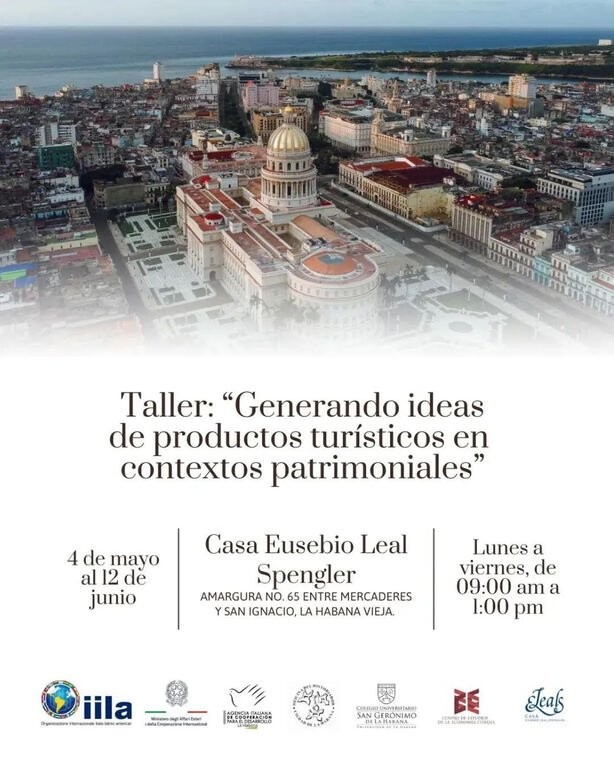
Specialists and professionals linked to cultural heritage management and urban planning will participate in the in-person workshop “Generating Ideas for Tourism Products in Heritage Contexts,” scheduled from May 4 to June 12 in Havana.
Prensa Latina news agency detailed that the event will take place at the Casa Eusebio Leal Spengler, which is promoting the program, framed within the international cooperation project “Training and Support Program for Architectural Enhancement and Sociocultural Revitalization in the Historic Center of the Capital.”
On social media, the Casa, which pays tribute to the distinguished historian of Havana, indicated that the workshop will last five weeks, covering topics such as an introduction to cultural heritage and tourism, heritage as a tourism resource, marketing of heritage products, and the design of tourism proposals in historical settings.
Participants who hold a university degree and attend at least 80 percent of the sessions will receive a Postgraduate Certificate awarded by the University of Havana, equivalent to four academic credits, PL adds.
Since the 1990s, many Cuban cities have developed, to varying degrees, strategies for the recovery of their urban heritage to enhance its value in the face of growing tourist demand for this type of product.
The research paper “Cuban Heritage Cities as a Tourist Product,” by Gabino Ponce Herrero, from the Department of Human Geography at the University of Alicante, published by the academic platform ResearchGate, highlights the work carried out in Old Havana, an international and national model of management, which other Cuban cities have followed by establishing Offices of the Historian or the Conservator. The work of entities related to the tourism sector has also been crucial, to manage tourism resources and develop strategies for the more efficient marketing of the tourism product made in the country, establishing a close complementarity between the recovery of heritage and its valuable use.