Bandstands in Cuba: A photo tour of the nation’s history
There are sites you shouldn’t miss taking home a souvenir photo of when visiting
Posted by Sol de Cuba, 09/04/2026
In world architecture and landscaping, bandstands have remained emblematic elements that combine beauty, functionality, and symbolism. These open structures, generally circular or polygonal, invite contemplation, rest, and social interaction, as they are usually located in parks and plazas.
Landscape architecture experts agree that these constructions are key to public spaces and foster sociability, making them important landmarks in cities.
Although in Cuba the custom of building these structures dates back to the colonial period, it spread over time, hence their diversity. Silent witnesses to national history, as they fulfill their mission of creating refuges in harmony with the environment, visiting them is like embarking on a nostalgic and cultural journey.
A photo in any of them becomes a memory that connects generations and territories, while inviting visitors to take ownership of a significant part of the nation, one especially inhabited by stories worthy of being told and shared.
Bandstands in Havana, the Cuban capital
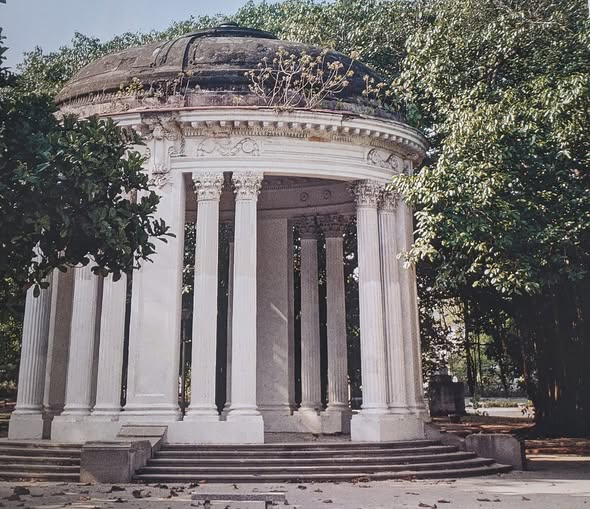
Havana boasts a wide variety of architectural styles, and these stands often serve as a backdrop for the city’s history.
Some no longer exist, such as that which stood at the intersection of Paseo del Prado and the Malecón, across from the still-standing former Tacón prison. It was the last architectural work of the first period of U.S. intervention on the island (1898-1902), inaugurated with the birth of the Republic on May 20 of that latter year.
From then on, it became a popular spot where people of all ages came to enjoy not only the band concerts but also the amenities of the seaside promenade that was taking shape with the construction of the Malecón, the La Punta esplanade, and the new “Students’ Park,” dedicated, since 1901, to the memory of the eight medical students executed by the Spanish government on November 27, 1871.
In 1926, it had to be demolished because it obstructed traffic as the Malecón was extended towards Avenida del Puerto. The hurricane of that year had damaged the roof, so, battered and unusable, it was completely removed two years later.
The bandstand, built of reinforced concrete, is considered among the first structures of its kind in Cuba, a sort of trial run for this construction system. The Frenchman Charles Brun was awarded the contract for it.
However, there are others that transcend the passage of time, such as the one found in the park at 5th and 24th Streets in Miramar, also built in the 1920s, standing over 10 meters tall with a large dome reminiscent of the Pantheon in Rome.
Adding to the list is the Glorieta Mudéjar in the Japanese Garden of the former Villa Miramar, residence of Carlos Miguel de Céspedes, now the 1830 Restaurant. It is said that the mosaics used in its construction came from the Charterhouse of Seville, and that the dome’s materials were brought piece by piece from India at a cost of 200,000 pesos at the time.
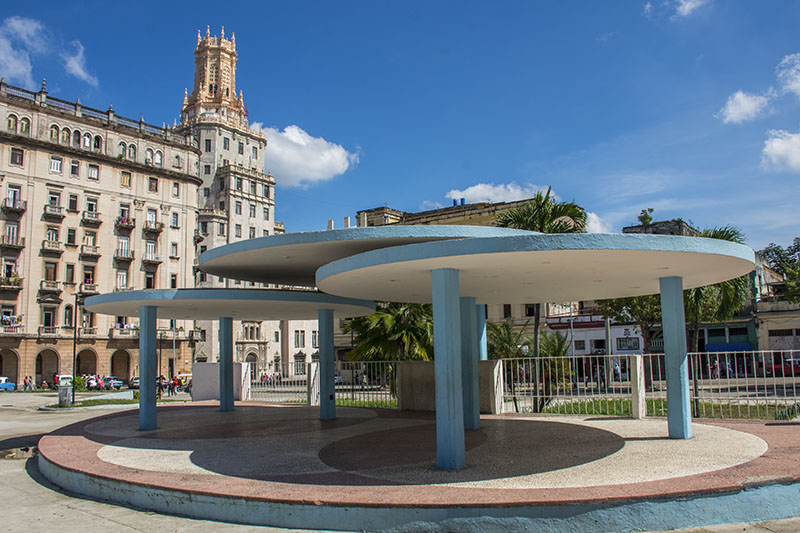
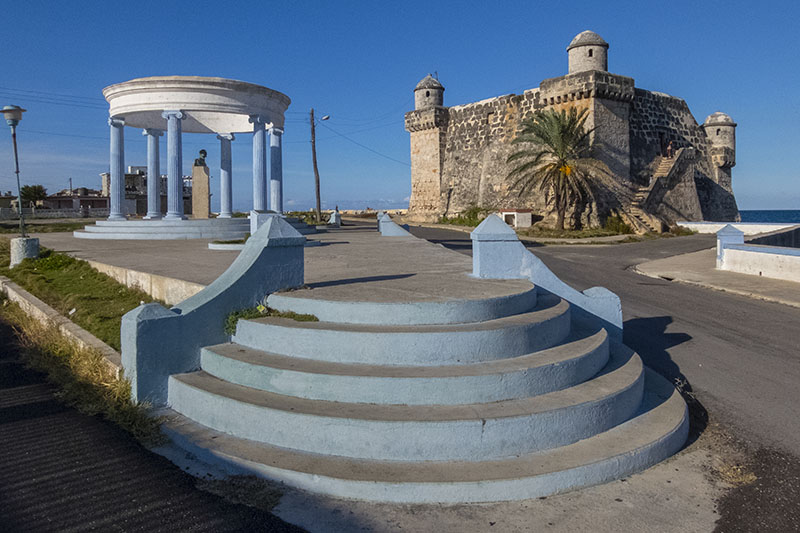
Bandstand in Santa Clara’s Parque Vidal
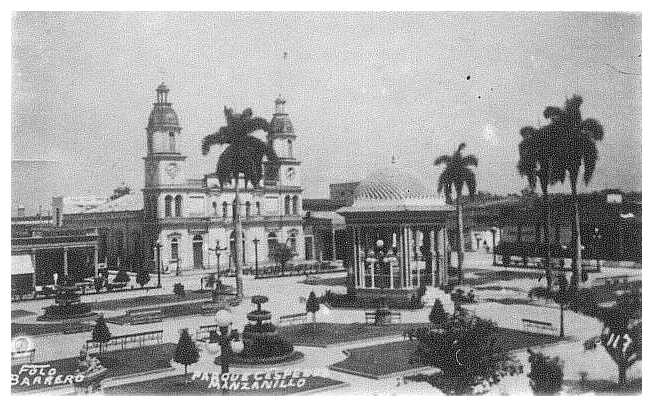
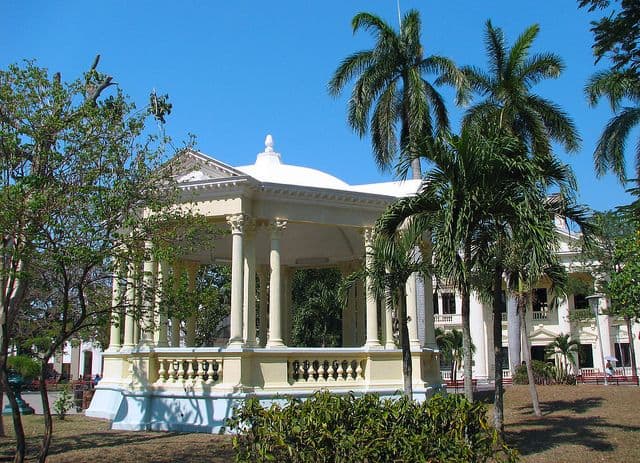
Witness to countless emblematic moments for the city’s inhabitants, from children’s games to musical evenings, this bandstand has marked local cultural life for over 90 years. Its eclectic architecture with neoclassical elements makes it an icon that defines the urban center and a space cherished for its tradition, acoustics and lighting, where the Municipal Concert Band and the Orquesta Típica (traditional orchestra) used to perform.
The current Glorieta de Santa Clara has marked the same city center since 1911. It is famous for its extraordinary acoustic characteristics. Leoncio Vidal Park was declared a National Monument on June 24, 1999.
Bandstand in Parque José Martí, Cienfuegos
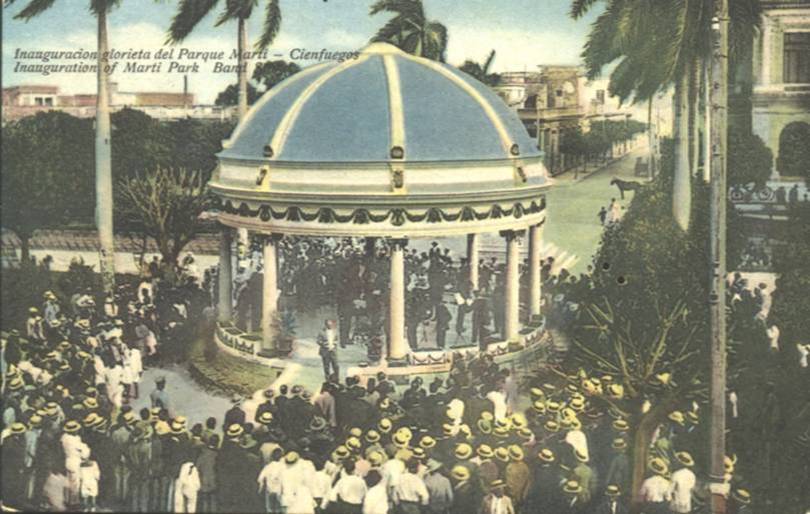
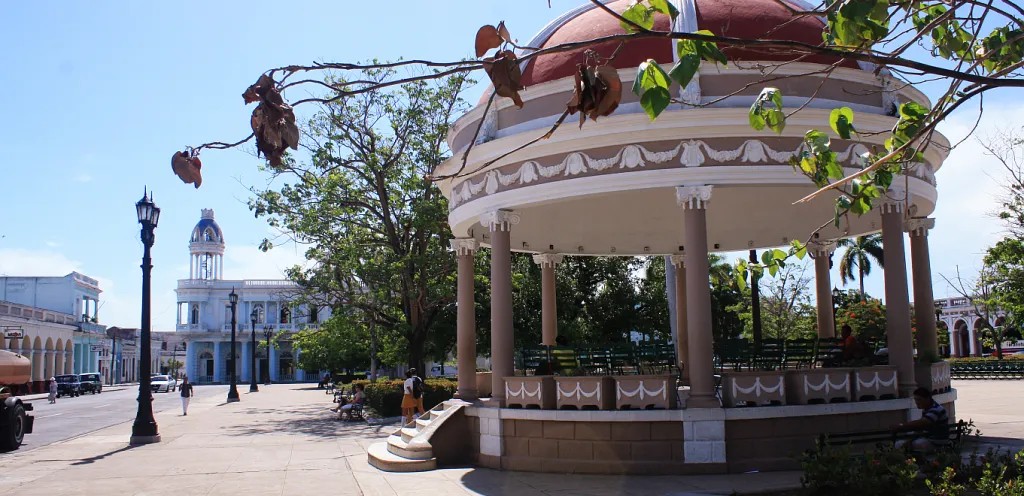
Parque José Martí, declared a National Monument, is the central park of Cienfuegos and is located on what was once the town’s main square. It was from this site that the popular uprising against dictator Fulgencio Batista took place in 1957.
Within the park are the Arch of Triumph, a marble statue of José Martí, and a beautiful bandstand, installed in 1921 at the behest of Álvaro Suero Rodríguez, son of Mayor Alejandro Suero Balbín, after the demolition of a previous wooden gazebo that stood in front of what is now the Tomás Terry Theater.
The Historic Center of Cienfuegos, where it is located, was declared a World Heritage Site in 2005.
Bandstand in Carlos Manuel de Céspedes Park, Manzanillo
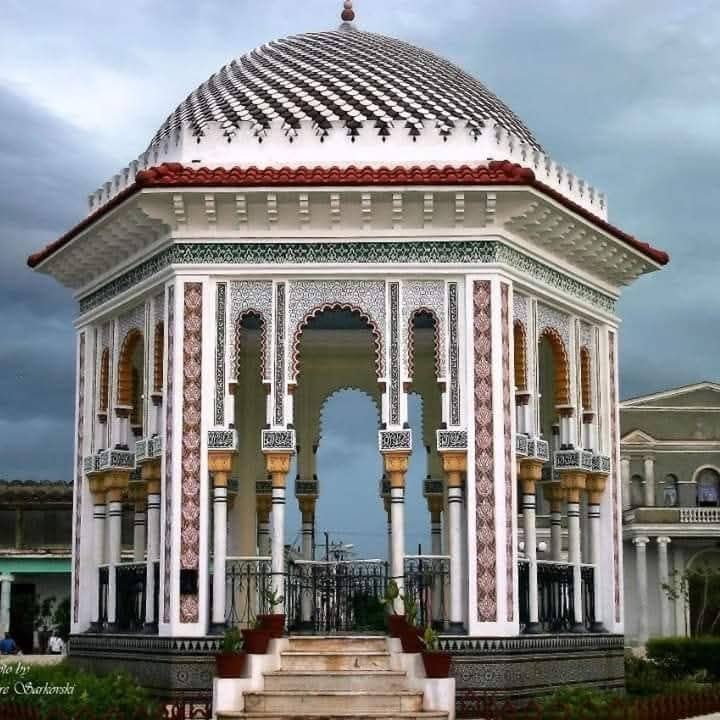
This stand, with its eclectic style and Moorish art, boasts rich architectural features and was erected thanks to the interest and material contributions of the city’s residents. It is considered one of the most beautiful in Cuba. It was designed based on the bandstand in the Court of the Lions at the Alhambra Palace in Granada, Spain, and the project’s implementation required financial support, primarily through donations.
In its overall design, it consists of a hexagonal base that rises more than a meter above the ground, with an exterior plinth clad in glazed ceramic tiles and interlaced designs, all polychromed with ingenious simplicity. The building features 18 semicircular, stilted, and polylobed arches, which are supported by 24 paired spandrel columns resting on small bases with slender, ringed shafts. The structure was officially inaugurated on June 24, 1924.