A trip through the underground wonders of Varadero and Matanzas
From the magnificent geological formations of the Cuevas de Bellamar to the enigmatic engravings of Cueva de Ambrosio
Posted by Sol de Cuba, 18/03/2026
Beyond the endless stretch of white sand and turquoise waters, Varadero holds other treasures below the surface. Just a few kilometers from the grand hotels, a fascinating subterranean world unfolds, where nature and human history have intertwined for millennia. From the magnificent geological formations of the Cuevas de Bellamar to the enigmatic engravings of Cueva de Ambrosio, venturing into these caves is to discover a different, mystical, and surprising Cuba.
Cuevas de Bellamar: Geological jewel of Matanzas
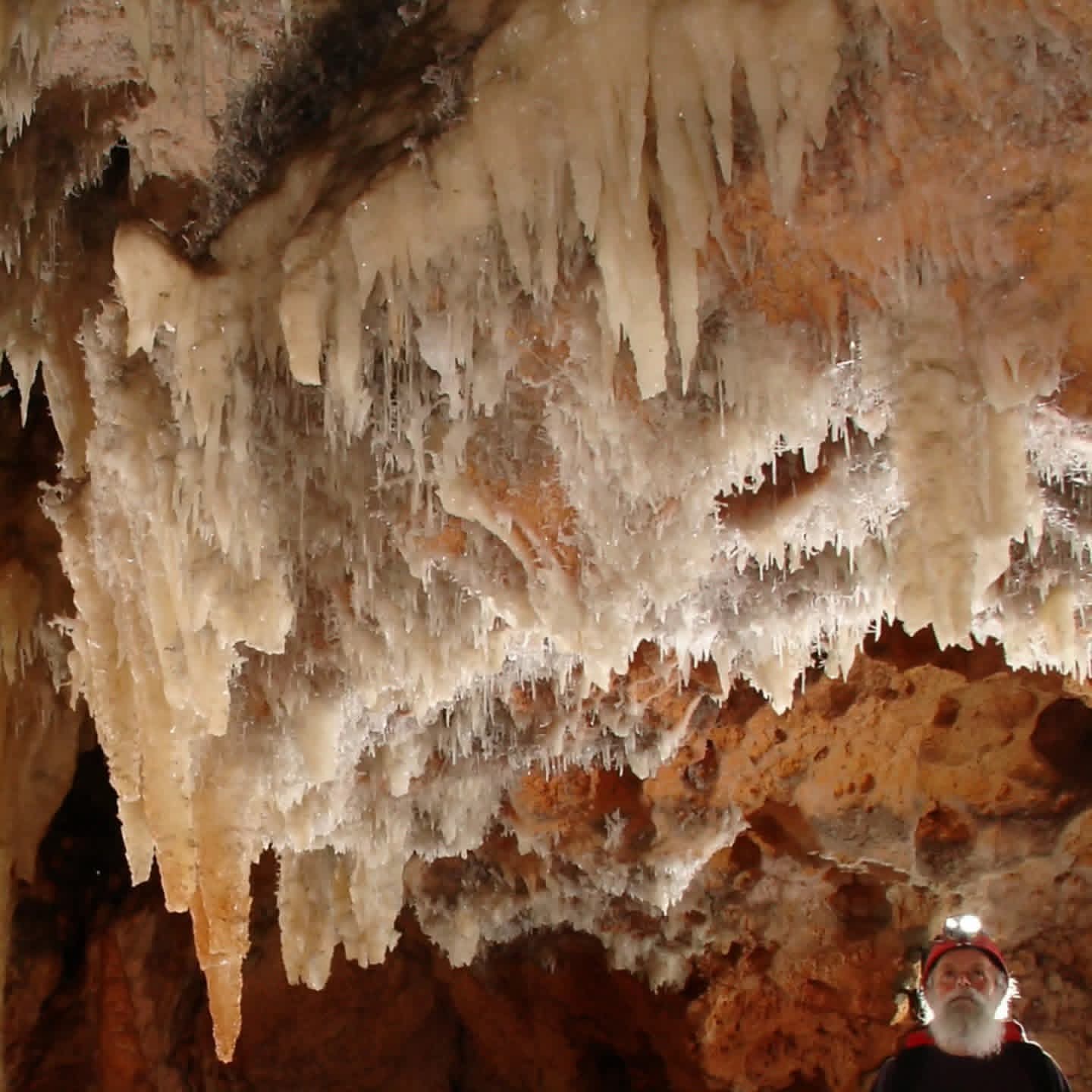
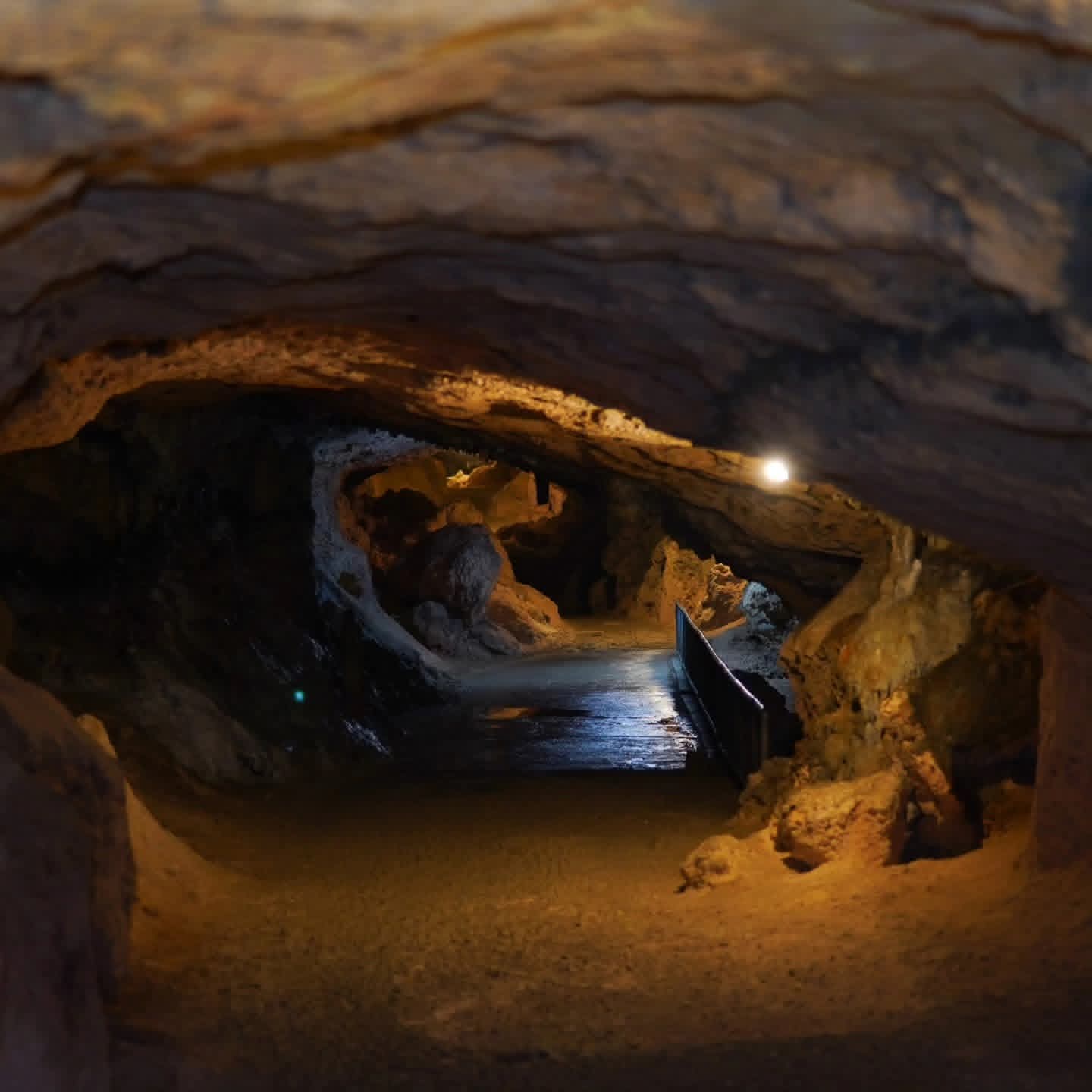
Considered one of Cuba’s natural treasures and the oldest tourist attraction on the island, the Bellamar Caves are a must-see for any traveler. Located about 5 kilometers southeast of the city of Matanzas, this system of galleries, extending over 23 kilometers and estimated to be 300,000 years old, was discovered accidentally in 1861 by a slave working in the area.
The visual impact upon entering is immediate. Contrary to the gloomy darkness one might expect, the walls of Bellamar glow with an almost mystical radiance. This is due to a thin layer of calcite crystals covering its formations, a unique natural phenomenon that leaves geologists and tourists alike breathless. During the approximately 45-minute guided tour, visitors pass through different chambers where stalactites and stalagmites have created whimsical shapes. The most famous is the “Manto de Colón” (Columbus’s Cloak), an imposing 12-meter formation resembling a petrified stone waterfall.
The tour also takes visitors to an underground stream of crystal-clear water in shades of turquoise and deep blue. And as with all great wonders, mystery surrounds it: legends speak of a mischievous goblin called “Güije” and of “La Americana,” a woman who, according to local folklore, disappeared in its waters and whose spirit still haunts the place known as “El Baño de la Americana.”
Cueva Saturno: A cenote for swimming and diving
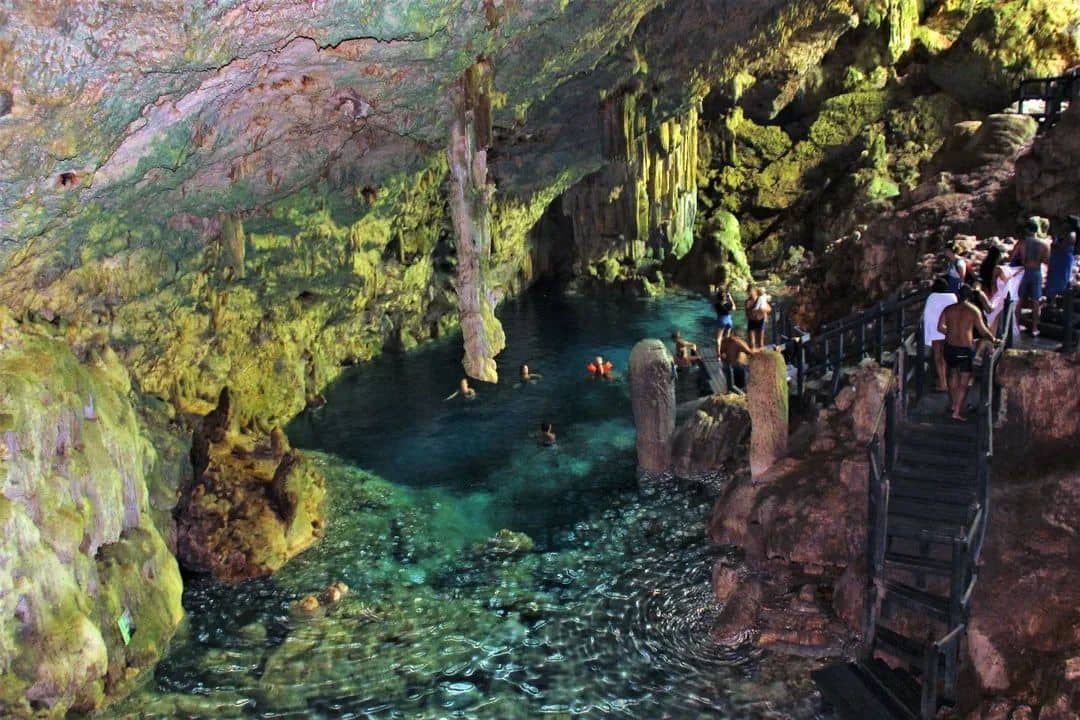
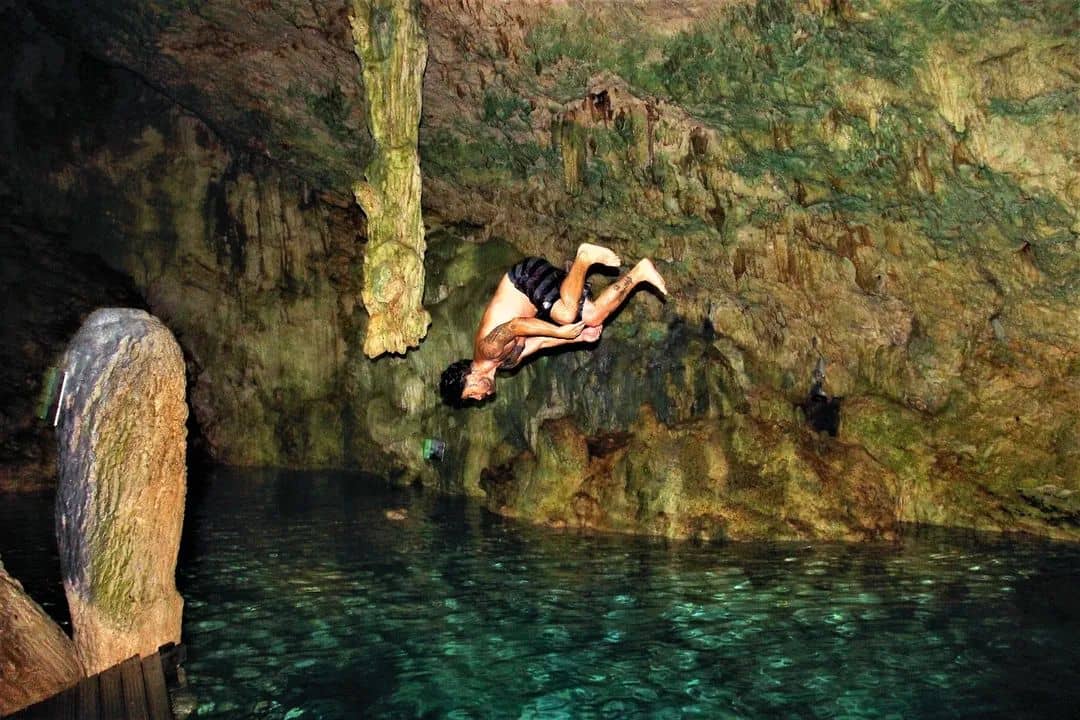
Very close to Matanzas, about 12km from the Juan Gualberto Gómez Airport, lies Saturn Cave, a perfect destination to escape the Cuban heat. Unlike Bellamar, the main attraction of this cave is not just walking among its formations, but diving into them.
Inside, the cave houses a small lake or cenote of crystal-clear freshwater, ideal for swimming and snorkeling. The light that filters through the openings above creates fascinating reflections on the water, allowing you to observe both the stalactites and stalagmites hanging above the surface and those that remain submerged, revealing that the water level has not always been the same. It is a site of great scenic beauty that combines the adventure of caving with the relaxation of a swim in a privileged natural setting.
Cueva de Ambrosio: Varadero’s rock art
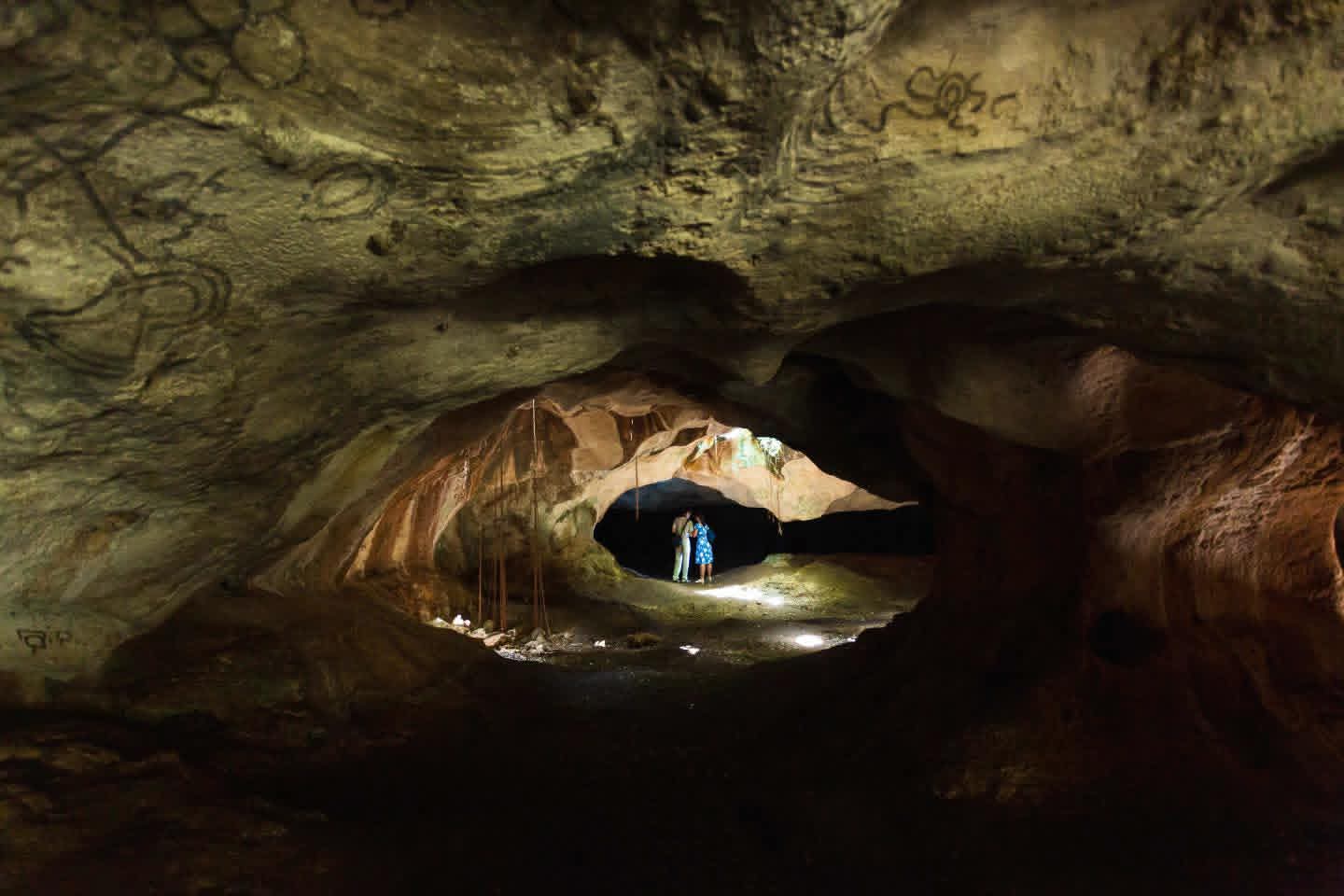
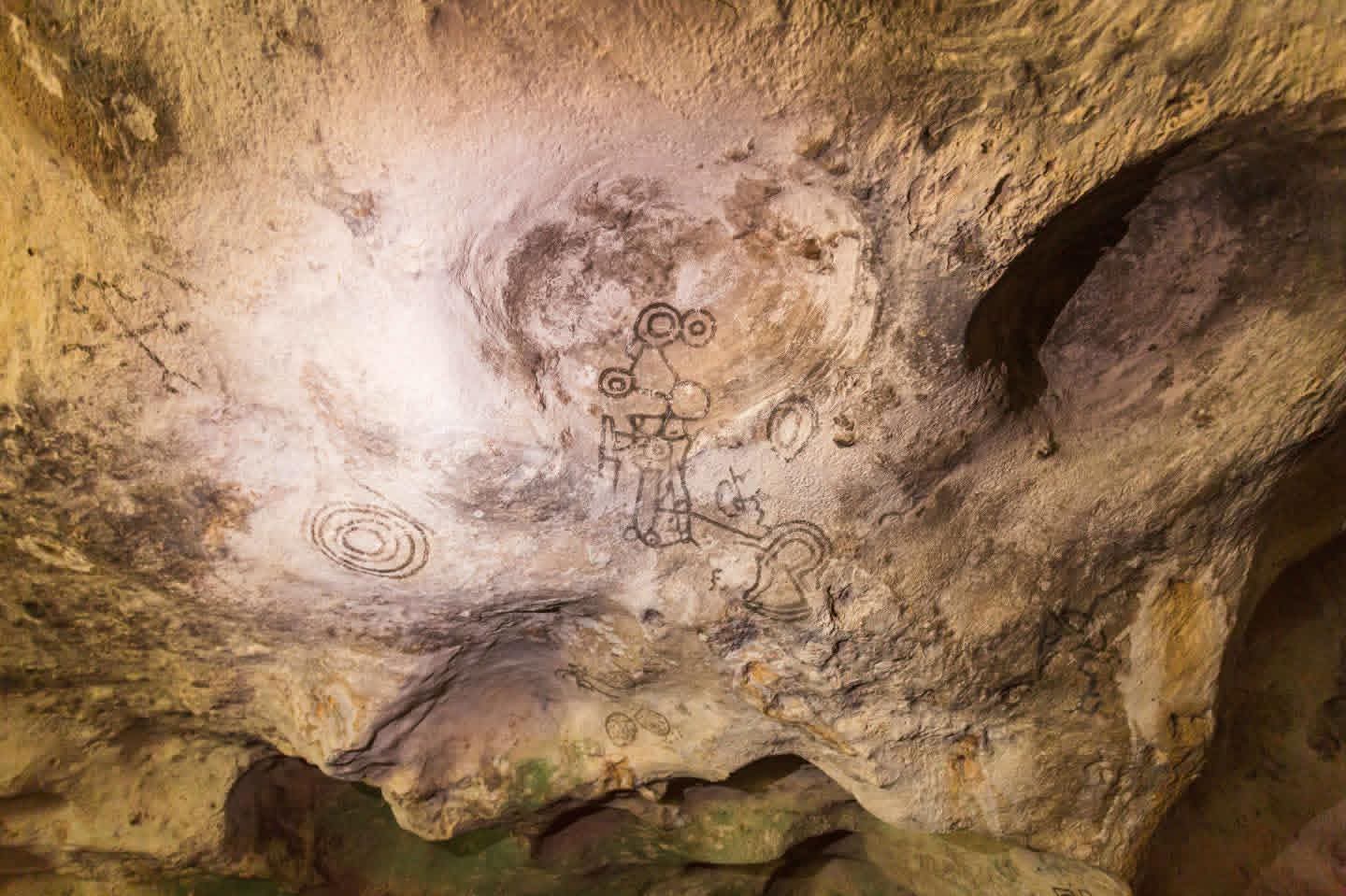
Located within the Varahicacos Ecological Reserve, on the Hicacos Peninsula (Varadero), Ambrosio Cave holds a secret of incalculable historical value. Discovered in 1961, this two-million-year-old rock grotto was once a refuge for pre-Columbian indigenous people, escaped slaves, and even pirates.
Today, it is one of the most important archaeological sites in the region. Within its 300 meters of galleries, approximately 47 pre-Columbian rock paintings can be seen. Created with red and black pigments, the concentric circle motifs stand out, their exact meaning remaining an enigma to experts. A visit to the “Skylight Room,” the most representative chamber, is especially magical when sunlight filters through the natural openings in the ceiling, softly illuminating these ancient artistic expressions and creating an atmosphere of direct connection with the past.
Cueva de los Musulmanes: Witness to the indigenous past
A short distance from Ambrosio Cave, also within the Varahicacos Ecological Reserve, lies the Cave of the Muslims. Its name has no religious origin, but rather comes from the nickname given to Cuban smugglers who used the area as a hideout in centuries past.
However, its current fame stems from a groundbreaking archaeological find: inside, the nearly complete skeleton of an indigenous man, between 25 and 35 years old, dating from between 500 BC and 500 AD, was discovered. This discovery was revolutionary, as the remains showed signs of syphilis, challenging the theory that this disease was brought to the Americas by European colonizers. Furthermore, alongside the human burial, bones of Megalocnus rodens, a prehistoric ground sloth that was part of the diet of the island’s first inhabitants, were also found. Visiting this cave is like stepping into a remote chapter of Cuban history, in an environment of great ecological value.
Exploring these caves is to embark on a trip that spans geological eras, connects with the island’s first inhabitants, and marvels at nature’s ability to sculpt stone. They are, without a doubt, essential sites for those seeking to go beyond the sun and delve into the depths of Cuba’s soul.