Tourism in Cuba: Identifying gaps to move forward
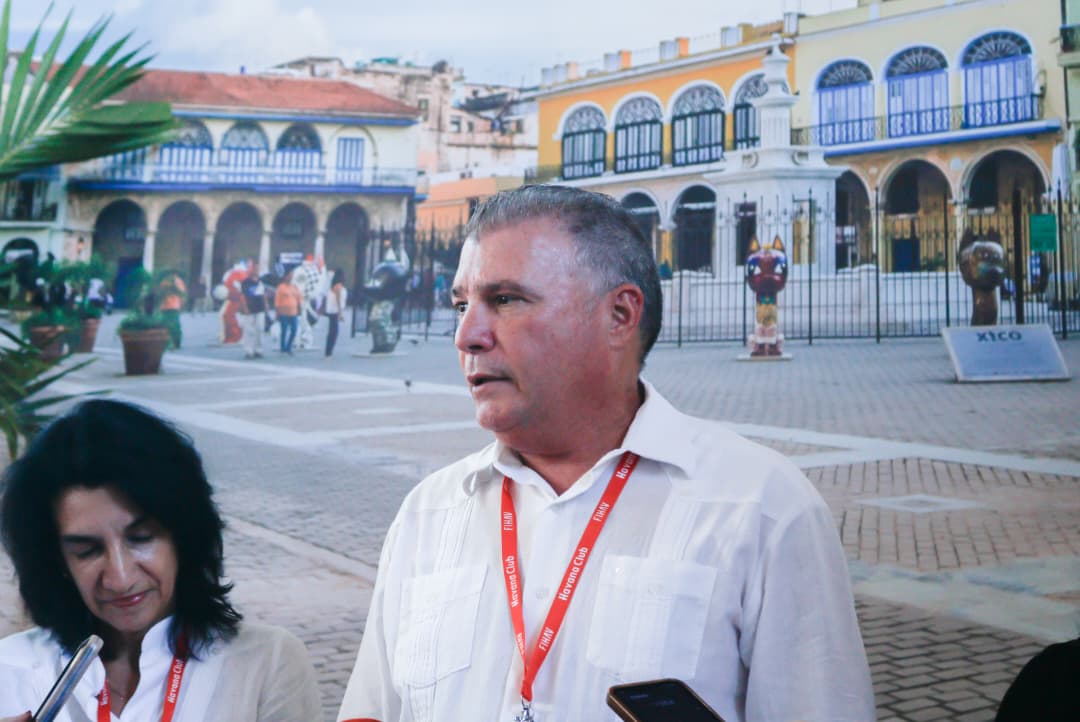
Minister of Tourism, Juan Carlos García Granda, spoke with the press on the first day of FIHAV 2025
Posted by Daily Pérez Guillén, 26/11/2025
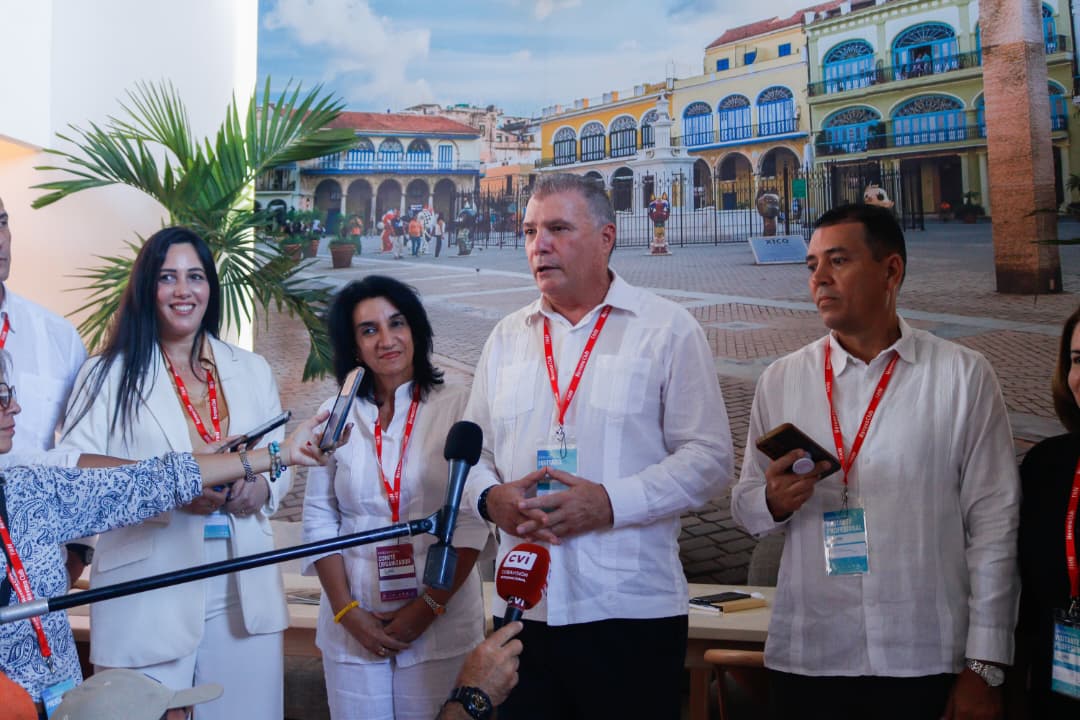
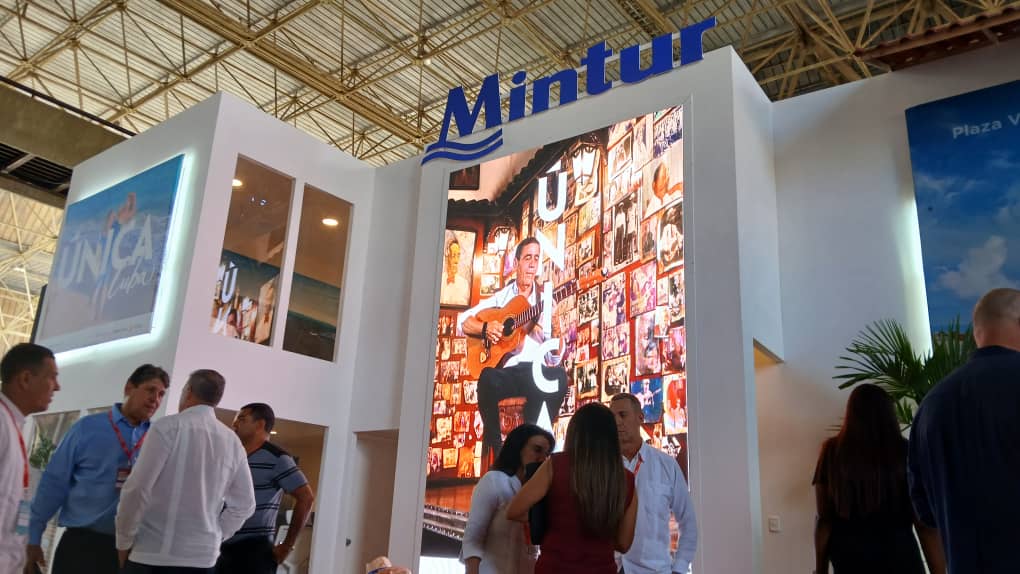
Cuban Minister of Tourism, Juan Carlos García Granda, assured that Cuba is prepared for a 2025-2026 high season that will be better than in recent years. Speaking to the press during the inauguration of the “Cuba Única” thematic area at the Havana International Fair, he revealed that “There is growth in advance bookings.”
However, he insisted on maintaining high standards of quality, “throughout the entire value chain, from the airport, to everything that complements it, the transportation system, state and private infrastructure; that’s where the focus lies,” he emphasized.
The minister referred to the adverse media campaign that is exploiting the complex health situation the country is experiencing and reported that an aerial fumigation system and vector and rodent control programs are in place in tourist areas.
“We are the only country in the world that has a doctor and a nurse in our hotels, which also provides a great deal of reassurance to both domestic and international guests,” he commented.
Regarding supplies, he stated that they have improved considerably in less than a year with the opening of the wholesale market and the operations of four wholly foreign-owned companies managing logistics for all hotels.
At the largest trade fair held in the country, García Granda explained that tourism development in Cuba has always been heavily influenced by foreign investment. “Almost 68%, 70% is based on some form of foreign investment,” he specified, and referred to the new lease agreements as an alternative that “gives greater autonomy to businesses investing in tourism.”
During the exchange with the press, the minister provided information about Canada, the largest source of tourists to the island and the focus of the next International Tourism Fair in May 2026. “We are recovering, the market is growing, there is a lot of interest in the country,” he pointed out.
“The scenario is very favorable for the Caribbean. The stance adopted by the Canadian people of not consuming US products means that we have a volume of people who previously went to Florida and Las Vegas, who are now looking for new destinations this winter.”
He also highlighted the rapid recovery of the Holguín tourist area after Hurricane Melissa. “We resumed tourist activity on November 5. This was a surprise to the market, given our organizational capacity and safety measures. As a result, we evacuated some 1,980 clients to Canada who chose to do so, but the rest, thanks to the elongated shape of our country, were able to be relocated to Ciego de Ávila, mainly to Cayo Coco.”
When asked about other source countries, he explained that due to the intensity of the blockade, a large share of the market has been lost from Cubans residing abroad and from US citizens themselves. “The measures taken since Trump’s first term have remained in place for many years. Those markets are contracted, but there is also an effect in European countries.”
Given this reality, he specified, “we need to find new markets and try to stimulate their potential because the island is ideal for tourism.”
In this regard, in Latin America, the Ministry of Tourism (MINTUR) is working to recover the Mexican market and others that consider Cuba very attractive, such as Colombia, Peru, Brazil and Argentina, which is growing. All indications are that this growth will consolidate in 2026.
“They tell us that these are areas where we need to do much more in terms of promotion, advertising, and paying much more attention to those markets, and that’s what we’ve been doing for the past year and a half,” he commented.
Regarding the Russian market, he explained that despite difficulties with the aircraft fleet, the visitor numbers have remained the same as in previous years.
García Granda also reported that efforts are underway to find aircraft to expand connections between the two countries. “Avianca launched a flight, and we are also encouraging other airlines, including Cubana, to fly to that destination.”
He also mentioned that a flight from Germany will begin in December with two weekly frequencies, operated by Cubana.
He added that they are also exploring alternatives to recapture the British market, with which there is currently no direct connection.
Regarding Turkey, he believes that tourism relations are strengthening, and he highlighted China’s potential. “I believe that by 2026, a Chinese tour operator will arrive in Cuba. That is essential to build confidence. It’s a very large market that we must continue to work on.”
He emphasized that in this case, it’s about promoting multi-destination tourism: “There is progress; everyone understands this now, and I hope that business owners can also make some multi-destination deals a reality this year.”
As announced weeks ago, the Italian chain Domina will begin managing properties in Cuba. According to the minister, “It has big goals and big challenges in Cuba. It’s simply about continuing to enhance the country’s prestige through operators of Domina’s caliber.”
The country’s hotel infrastructure has the capacity to receive more than 7 million tourists a year. According to García Granda, many facilities have been remodeled, and measures have been taken to improve their condition.
“In such an aggressive environment aimed at destroying Cuban tourism, we always find a real opportunity to move forward,” he asserted.